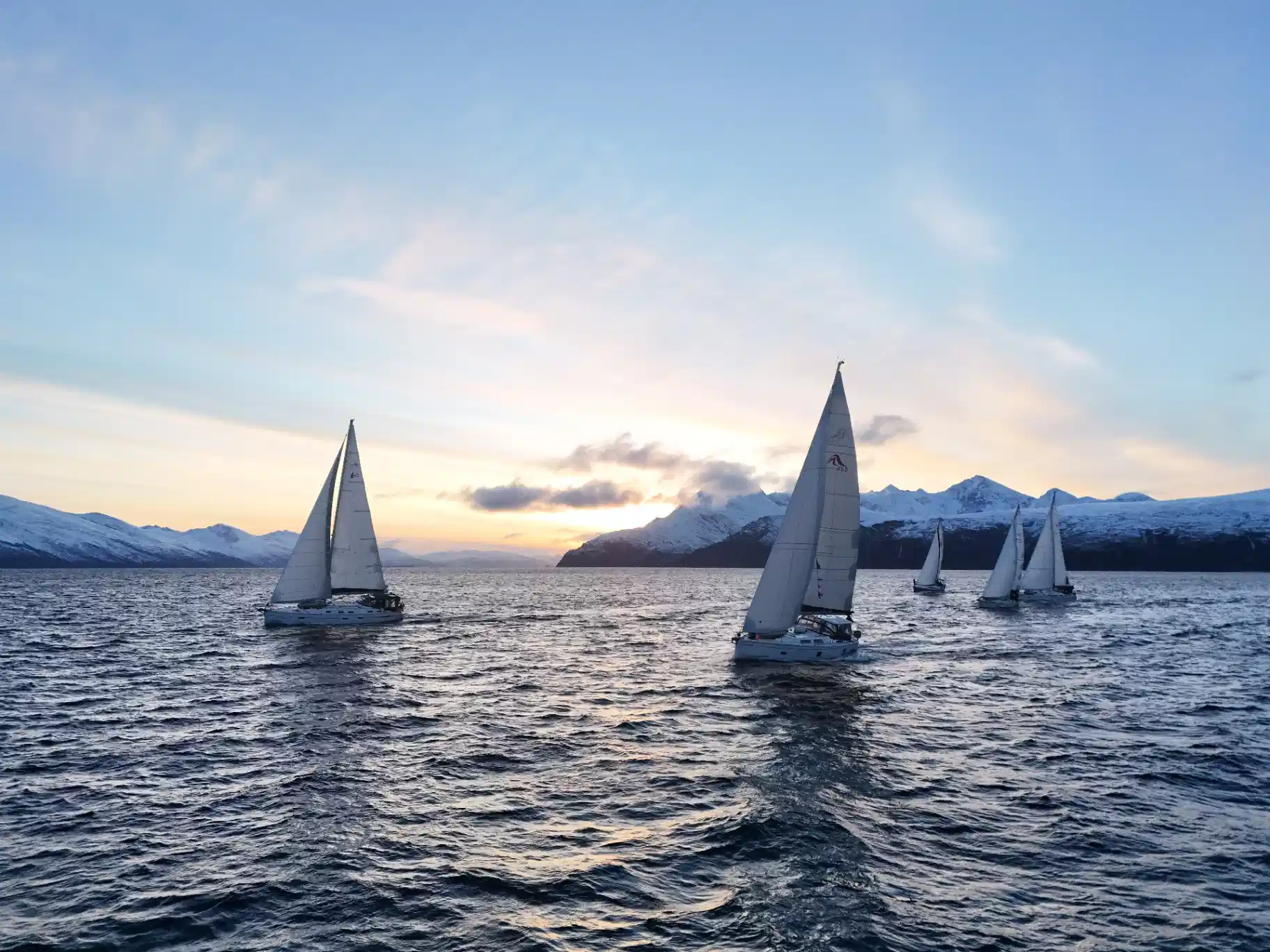
These are the rules we design experiences against. They decide what we build, what we decline, and what the crew does when a plan has to change.
Trust creates freedom
A guest who trusts the crew stops managing the trip. They stop checking the forecast, stop wondering whether the anchorage is safe, stop calculating how long the crossing will take. That is when the Arctic actually reaches them.
Trust is built before anyone steps aboard: in how we answer an enquiry, how honestly we describe conditions, and how clearly we say what a week will and will not be. It is confirmed on board, in small decisions taken calmly.
Participation creates connection
You are welcome to take the helm, trim a sail, help with the lines, or cook with the crew. None of it is required. All of it is available.
Guests who take part remember the week differently. The boat stops being a service and becomes something they were part of running.
Nature should feel real
We do not soften the Arctic to make it easier to sell. Weather changes plans. Wildlife appears on its own terms or not at all. Some days are cold, grey and long.
That honesty is the product. A place that can be inconvenient is a place that is still itself.
Comfort enables deeper experiences
Warmth, dry clothes, a hot meal and a proper night's sleep are not luxuries in the Arctic. They are what makes it possible to go further, stay out longer and still enjoy the fourth day as much as the first.
Our vessels are heated and insulated, and equipment is rated for cold water. Comfort here is functional, not decorative.
Small groups create meaning
We sell the whole boat. A group has the vessel to themselves, with no mixed-group dynamics and no seat allocation.
Small numbers change what is possible: the boat can anchor where a larger vessel cannot, plans can be adjusted for the people on board, and everyone gets to know everyone by the second evening.
The crew is the experience
Guests remember three things from a sailing week: the nature, the people they were with, and the crew. Our skippers and guides are not a service layer. They are the reason the week works.
Some have sailed these waters for 20 years. Some grew up on them. All of them decide what happens when the forecast turns.
Calm professionalism wins
Nothing on board should look dramatic. Route changes are explained before they are needed, gear is checked before it is used, and the crew's tone does not change with the wind.
Calm is a competence, and it is the clearest signal a guest has that the people running the boat know the waters they are in.