Experience
Ski & Sail Svalbard
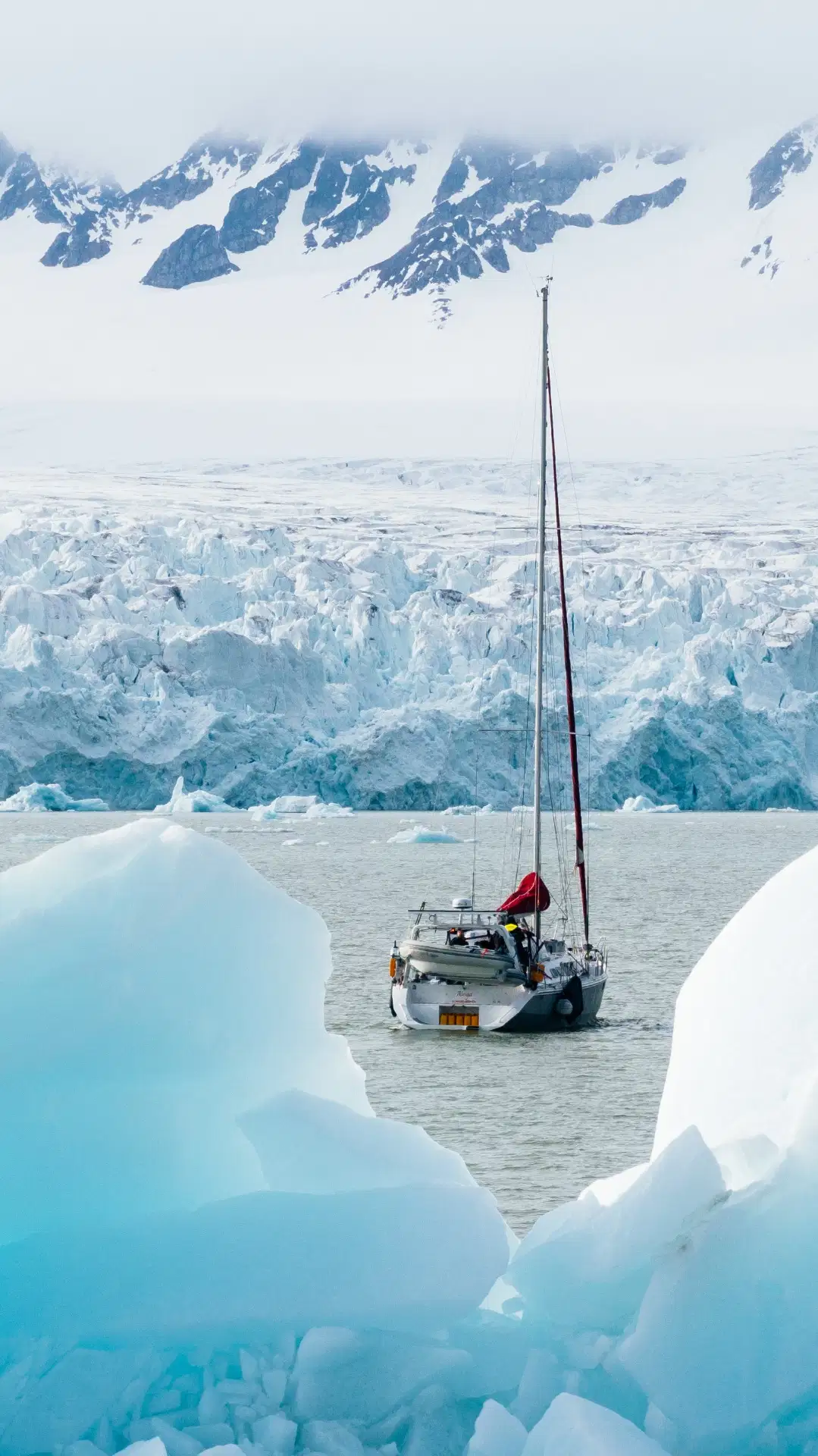
Ski & Sail Svalbard is a whole-boat ski touring expedition at 78°N, with a sailing yacht as basecamp. We sail from Longyearbyen through the fjords of Spitsbergen in spring, skiing untracked slopes that run down to the sea, with a certified guide and polar bear watch ashore.
At a glance
| Season | May to mid June |
|---|---|
| Duration | 7 or 8 nights |
| Base | Longyearbyen, Spitsbergen |
| Group size | Up to six guests, whole boat |
| Sold as | Whole boat — private and group charter |
| Level | Strong ski tourers, comfortable with 800 to 1,000 metres a day in polar conditions |
| Crew | Skipper, plus certified mountain guide with polar bear watch training |
Skiing at 78 degrees north
Svalbard in spring is a rare combination: snow that still reaches the sea, fjords that have opened enough to sail, and light that lasts around the clock. The mountains of Spitsbergen are not high — most summits sit between 600 and 1,100 metres — but they are large, empty and almost entirely untracked.
The skiing is broad and open rather than steep and technical. Long approaches across glacier tongues, wide bowls, and descents that finish on a beach where the tender is waiting. What makes it demanding is the environment, not the gradient: cold, distance from help, and a landscape where you carry everything you need with you.
Boreal Yachting has operated in Svalbard since 2008. We know which fjords open first, which anchorages hold in a northerly, and where the ice edge usually sits in May.
Wildlife, weapons and the rules
Svalbard is polar bear country, and going ashore means going ashore properly. The guide carries a firearm as a last resort, keeps a watch while the group is on the ice, and plans routes with sight lines in mind. This is a legal requirement, not a precaution we invented.
We follow AECO guidelines on wildlife distance, landing sites and cultural heritage, and we notify Sysselmesteren, the Governor of Svalbard, as required for our operations. Nothing is left ashore, and nothing is taken.
You are likely to see Svalbard reindeer, Arctic fox tracks and huge numbers of seabirds at the cliffs. Bears are seen on some trips and not on others. We do not chase them.
A boat instead of a tent
The alternative to a yacht in Svalbard is a snowmobile camp or a tent on the ice. The boat changes the whole character of the week. You ski all day in a cold, serious environment, and then you come back to a heated cabin, a hot shower and a cooked meal.
It also extends your range. Over eight nights the yacht can cover the length of Isfjorden and reach into fjords that no day trip from Longyearbyen touches. The route is drawn around ice, wind and where the snow has held.
Anchorages are chosen for shelter and for the ski terrain above them. In practice, most mornings begin with the tender running the group to a beach below the day's line.
A typical week
The route is decided by ice, weather and the people on board. This is what a good week tends to look like.
Day 1 — Longyearbyen
Board in Longyearbyen, stow gear and complete safety and firearms briefings.
We sail out into Isfjorden in the evening and anchor for the night.
Days 2 to 7 — Spitsbergen fjords
Ashore after breakfast with the guide on polar bear watch. A tour of six to eight hours, climbing 800 to 1,000 metres.
Back on board in the afternoon, then a passage to the next fjord while the light holds — which, by mid-May, means all night.
One day is usually given to the ice: a slow approach to a glacier front, and time on deck rather than on skis.
Final day — return to Longyearbyen
A last tour close to Isfjorden if conditions allow, then the sail back.
Alongside in Longyearbyen in the afternoon, with time to see the town before flying south.
What is included
Included
- Whole-boat charter for your group, for seven or eight nights
- Skipper and certified mountain guide with polar bear watch
- All meals on board and hot drinks
- Tender transfers ashore
- Avalanche transceiver, shovel and probe
- Fuel, harbour fees, on-board linen and Svalbard operating permits
Not included
- Flights to and from Longyearbyen
- Accommodation in Longyearbyen before and after
- Travel, evacuation and mountain rescue insurance, which is mandatory in Svalbard
- Personal ski equipment
- Alcoholic drinks
- Crew gratuities
The boat
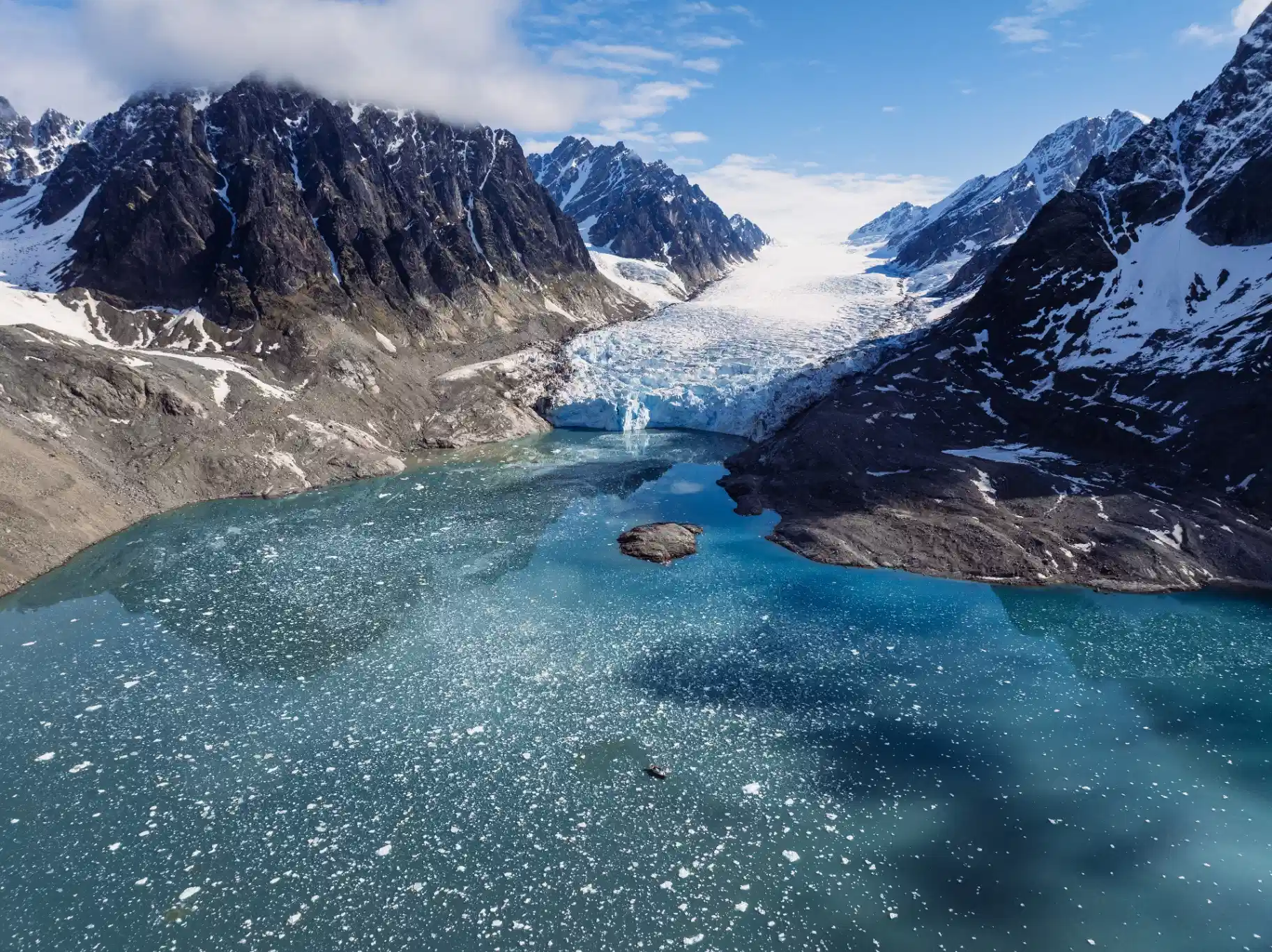
Svalbard weeks sail on our expedition vessels — reinforced, insulated and equipped for high latitudes, with diesel heating, satellite communications and a tender rated for cold water. Vessel allocation depends on your group size and dates.
Who this is for
- Experienced ski tourers who have done a full week of touring before, ideally in cold conditions.
- Groups who want a genuine polar expedition rather than a resort week.
- Guests who accept that the plan is written by ice and weather.
- People who are comfortable being a long way from a hospital.
This is not a first ski touring trip, and it is not a wildlife cruise. If you want guaranteed polar bear sightings or short days, our summer Svalbard expeditions suit you better.
Practical
Fitness and experience
You should have a season or more of ski touring behind you and be able to climb 800 to 1,000 metres carrying a day pack, six days out of eight. Cold-weather experience matters as much as fitness.
What to bring
Touring skis and boots, skins, warm layers well beyond what you would take to the Alps, spare gloves, goggles and glacier glasses, and a proper sleeping layer for the cabin. Soft bags only.
Weather and light
Late April can hold minus 20°C; by early June the fjord ice is going and it may rain. The sun does not set from around 20 April. Sea ice can close a fjord at short notice, and we plan around it.
Getting to Longyearbyen
Daily flights run from Oslo and Tromsø. Arrive at least one day early — a missed connection cannot be fixed once the boat has sailed.
Questions guests ask
- Is it safe to ski in polar bear country?
- Yes, with the right procedure. The guide keeps a bear watch while the group is ashore, carries a firearm as a last resort, and plans routes with clear sight lines. We follow AECO guidelines throughout.
- How cold does it get?
- Late April can sit near minus 20°C with wind chill. By late May it is usually between minus 5 and plus 5°C. The boat is heated day and night.
- Will we see polar bears?
- Sometimes. We do not approach or search for bears, so sightings are a matter of chance. Reindeer, Arctic fox and large seabird colonies are close to certain.
- Do I need a special insurance policy?
- Yes. Svalbard requires cover for search, rescue and evacuation. Standard travel insurance rarely includes it, and we will ask to see your policy.
- Can we choose the route?
- You tell us what you want from the week and we shape a plan around it. Ice and weather then have the final word, every time.
- Are the days long?
- Yes. Six to eight hours on skis is normal, and the light does not run out in May, which makes it easy to keep going longer than your legs want.
- Can beginners join if the rest of the group is experienced?
- Not on this trip. Everyone on board needs to be able to ski the terrain the group is skiing. Ski & Sail Norway is the better starting point.
Enquire about Ski & Sail Svalbard.
Tell us what you have in mind. We will come back to you within two working days with a considered answer — not a template.