Private Expedition
Svalbard Sailing Expedition: The Edge of the Arctic World
Sail to the edge of the Arctic — polar bears, glaciers, midnight sun, and some of the world's last untouched wilderness.
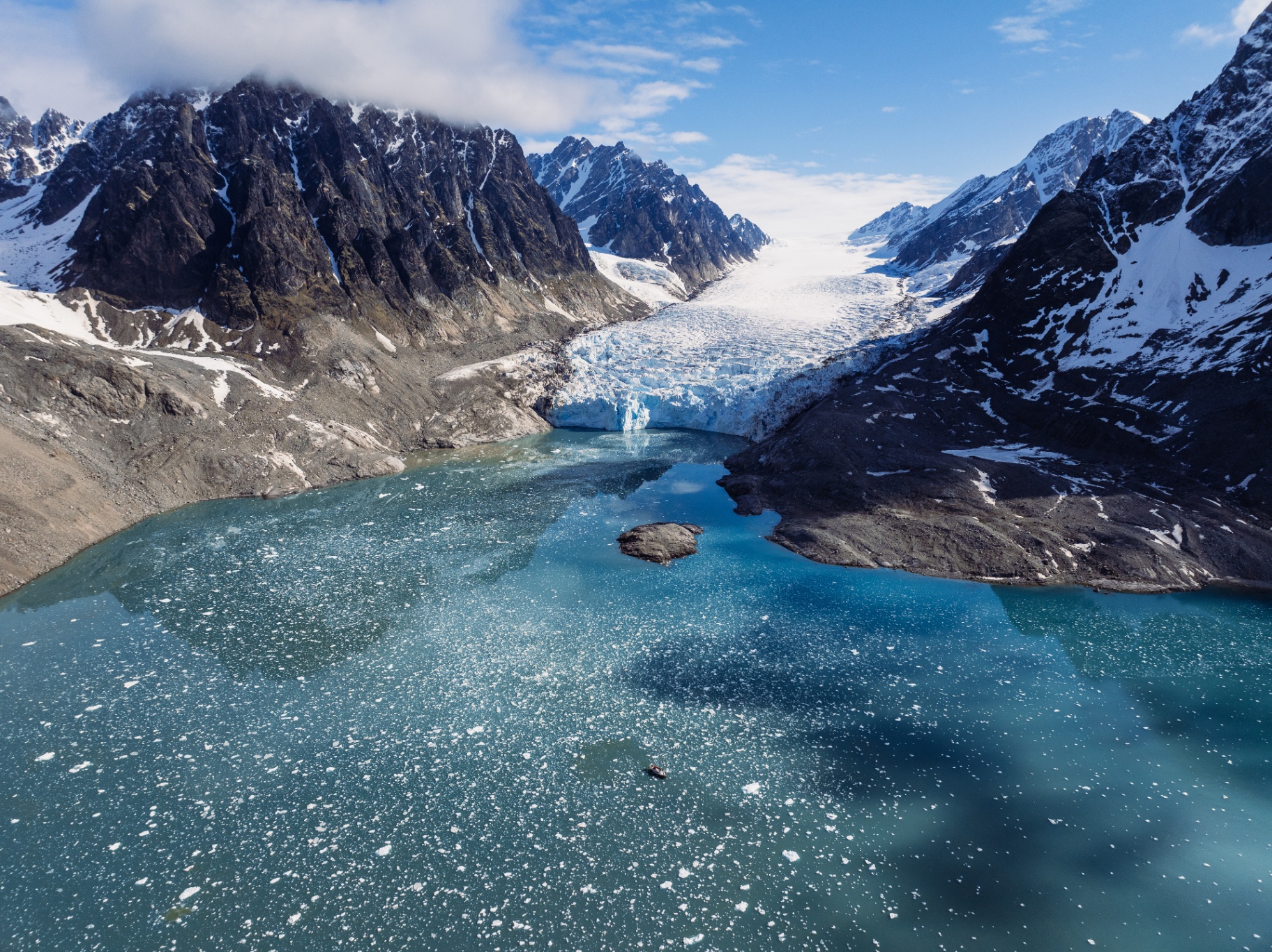
Svalbard does not ease you in gently. It announces itself. The first glacier you see, calving into a fjord the colour of deep turquoise. The first polar bear, tracked by your guide through binoculars from the deck, moving across a snowfield at a distance that feels both safe and intimate. The first night — except that there are no nights in June and July, only a sun that circles the sky without ever setting, painting the mountains in a light that photographers describe as unlike anything else on Earth.
This is why people travel 600 kilometres north of the Norwegian mainland to an archipelago halfway to the North Pole. Not for the comfort, though the comfort on a well-crewed expedition yacht is considerable. For the encounter with a landscape and a scale of wildness that most of the world no longer has.
Boreal Yachting has been running sailing expeditions to Svalbard for years. This page tells you what to expect, how to prepare, and what makes a sailing expedition the finest way to experience this extraordinary place.
Why Svalbard? And Why by Sailing Yacht?
Svalbard is a Norwegian archipelago at 74–81 degrees north latitude — the northernmost territory of any non-polar state. Its largest island, Spitsbergen, is home to Longyearbyen, the administrative capital, which has an airport served by regular flights from Oslo and Tromsø. Beyond Longyearbyen, there is almost nothing: a handful of research stations, a few trappers' cabins, and then wilderness extending to the northern polar ice.
Approximately 65 percent of Svalbard is protected as national parks or nature reserves. Wildlife populations — polar bears, Arctic foxes, Svalbard reindeer, walrus, ringed and bearded seals, beluga whales, and extraordinary seabird colonies — exist at densities that have been eliminated from almost everywhere else in the Northern Hemisphere.
A sailing yacht is the optimal vehicle for experiencing Svalbard for several reasons:
- Access. A small yacht can enter fjords, coves, and coastal areas that larger expedition vessels cannot reach. Many of Svalbard's most extraordinary wildlife habitats are shallow, narrow, or otherwise restricted to smaller craft.
- Mobility. The itinerary responds to wildlife sightings, ice conditions, and weather in real time. If polar bears are observed on a particular coastline, the boat stays. If a fjord is blocked by ice, the boat finds another route.
- Intimacy. With eight people maximum on board (including skipper and guide), a Boreal Svalbard expedition is a profoundly different experience from a cruise ship carrying 200 passengers. Every wildlife sighting is shared by a small group. Every decision about where to go next is made with the whole group in mind.
- Silence. A sailing yacht under sail is one of the quietest vehicles on Earth. In an environment as acoustically extraordinary as Svalbard, this matters.
Wildlife and Natural Highlights
Polar bears
Svalbard has an estimated 3,000 polar bears in the wider Barents Sea region, with several hundred present on the archipelago at any time. Polar bear sightings are a central part of the Svalbard experience, but they are wild animals in an enormous landscape — encounters depend on position, timing, and luck.
Since January 2025, new Norwegian regulations require a minimum distance of 300 metres from polar bears between July and February, increasing to 500 metres between March and June when the animals are more vulnerable. Boreal adheres strictly to all wildlife protection regulations, and our guides carry the equipment and experience to observe polar bears safely and responsibly.
Encounters happen most frequently near the sea ice edge in the north and east of Svalbard, where bears hunt for ringed seals. The boat's mobility means we can position ourselves in areas with the best conditions for sighting.
Other wildlife
Svalbard's wildlife calendar is rich beyond polar bears. Walrus haul-outs — groups of dozens or hundreds of animals on beaches — are a regular feature of summer expeditions. Beluga and minke whales appear in fjords. The birdlife is extraordinary: little auks nesting in millions on cliff faces, Arctic terns defending nests with characteristic ferocity, puffins, eider ducks, barnacle geese, and the great skuas that rule the tundra.
Svalbard reindeer — a subspecies smaller and stockier than mainland reindeer, evolved for the Arctic — are commonly seen grazing on tundra directly from the boat. Arctic foxes appear at irregular intervals, often curious rather than shy.
Glaciers and Arctic landscape
Svalbard has over 2,000 glaciers covering approximately 60 percent of the archipelago's land area. Many of these calve directly into the sea, producing a constant low groan and the periodic crack and splash of ice blocks entering the water. Sailing into a tidewater glacier in a small yacht, watching the ice face at close range, is an experience that is difficult to prepare for and impossible to forget.
The fjords of western Spitsbergen — Isfjorden, Kongsfjorden, Van Keulenfjorden — each have a distinct character: different geology, different light, different populations of wildlife. A well-planned itinerary moves through several of them.
The Expedition: What to Expect
The yacht
Boreal's Svalbard expeditions use vessels specifically selected and equipped for polar conditions. The Aleiga is a 45.5-foot aluminium-hulled yacht with a raising centreboard that allows navigation in shallower waters than a conventional keel yacht. She carries four double cabins and is outfitted for Arctic conditions: reinforced for ice contact, full safety equipment, appropriate navigation systems, and the storage capacity required for extended offshore passages.
On Svalbard expeditions, we carry eight people maximum — skipper, guide, and up to six guests. This is a deliberate choice. The extra space is used for safety equipment, provisions for extended offshore passages, and the general comfort of a small group in a shared space over multiple days.
The guide
Every Svalbard expedition is accompanied by a certified expedition guide with specific Svalbard experience. This is not optional — Norwegian regulations require a qualified guide and a licensed firearm holder for all groups venturing outside settlements. Polar bears present a genuine risk on land, and our guides are trained to manage this risk while ensuring that encounters with wildlife remain extraordinary rather than frightening.
The guide's role extends beyond safety. They are your interpreter of the landscape — its geology, ecology, history, and wildlife — and the person who makes the call each morning about where to go and what to do based on conditions.
Typical itinerary
Svalbard expeditions depart from Longyearbyen and run for seven to ten days. No two expeditions follow exactly the same route — ice conditions, weather, and wildlife sightings determine the specific path. A typical expedition might include:
- The western fjords of Spitsbergen: Isfjorden, Van Keulenfjorden, and the approach to the ice edge
- Magdalenefjorden: one of Svalbard's most dramatic fjords, with a massive tidewater glacier
- The northwestern bird cliffs: little auk colonies and the seabird spectacle of northern Spitsbergen
- The ice edge: the boundary between open water and polar pack ice, where polar bears and walrus concentrate
- Ny-Ålesund: the world's northernmost permanent settlement, an international research station open to visiting yachts
Practicalities
| Season | June to August (midnight sun, ice receding) |
|---|---|
| Duration | 7–10 days from Longyearbyen |
| Guests | Maximum 6 guests + skipper + guide |
| Qualifications | No sailing experience required. Physical fitness required for shore excursions. |
| Getting there | Fly to Longyearbyen (LYR) via Oslo or Tromsø. Regular commercial flights available. |
| What's included | All accommodation on board, meals, skipper, guide, shore excursions |
| Firearms | Required by law outside settlements. Carried and managed by the guide. |
| Regulations 2025 | New polar bear observation distances in force from January 2025: 500m (March–June), 300m (July–February) |
| Booking | Svalbard slots are extremely limited. Book 12–18 months ahead where possible. |
Is a Svalbard Expedition Right for You?
A Svalbard sailing expedition is a serious undertaking in a remote environment. It is not a cruise ship holiday with polar bear scenery. There are no evacuations possible from mid-fjord if the weather turns. The boat is a small shared space. Shore excursions involve hiking on uneven Arctic terrain with a guide who carries a firearm for good reason.
It is also one of the most extraordinary experiences available to any traveller on Earth. We say this without reservation. Svalbard changes people — the scale of the wildness, the silence, the light, the wildlife, the sense of genuine remoteness all combine into something that guests consistently describe as a defining experience of their lives.
If you are physically active, comfortable in a small-group environment, open to the unpredictability of an expedition where nature sets the agenda, and genuinely excited by the idea of genuine Arctic wilderness — you are ready for Svalbard.
Sustainability and Responsibility in Svalbard
Svalbard is warming at six to seven times the global average rate. The glaciers are retreating. The sea ice is declining. The polar bear faces genuine long-term pressure from the loss of its hunting habitat. We take this seriously.
Boreal Yachting is Eco-Lighthouse certified — Norway's national environmental certification standard. On our Svalbard expeditions, we adhere to all AECO (Association of Arctic Expedition Cruise Operators) guidelines and the regulations set by the Governor of Svalbard. We practice a strict leave-no-trace approach to shore landings and maintain appropriate distances from all wildlife, without exception.
We believe that the best reason to visit Svalbard is to understand what is at stake in the Arctic — and to become someone who cares about protecting it.
Plan your Svalbard expedition
- → Contact Boreal Yachting to discuss dates, suitability, and availability
- → Svalbard expeditions run June–August only
- → Maximum 6 guests — book early, spaces are very limited
- → post@boreal-yachting.com | +47 77 72 92 00